Most people think you need a gym, barbells, or fancy equipment to build muscle.
But here’s the truth: your body is one of the most effective resistance tools you’ll ever have.
With the right technique, progression, and consistency, you can build serious strength and muscle using only bodyweight exercises — no weights, no machines, no excuses.
Let’s break down how and why it works.
The Science Behind Bodyweight Muscle Growth
Building muscle comes down to one principle: progressive overload — gradually increasing the challenge placed on your muscles over time.
When you lift weights, you do this by adding more plates.
When you train with your body, you do it by adjusting leverage, tempo, volume, and intensity.
Here’s how it works biologically:
- Every time your muscles face resistance, tiny fibers tear.
- Your body repairs these fibers stronger and thicker.
- Over time, that leads to hypertrophy — muscle growth.
So even without weights, as long as you’re challenging your muscles close to failure, they’ll grow.
Why Bodyweight Training Works
- Full-Body Engagement – Unlike isolation machines, bodyweight moves activate multiple muscle groups at once.
- Functional Strength – You develop real-world power, balance, and coordination.
- Joint-Friendly Workouts – No heavy loads means less strain on joints and ligaments.
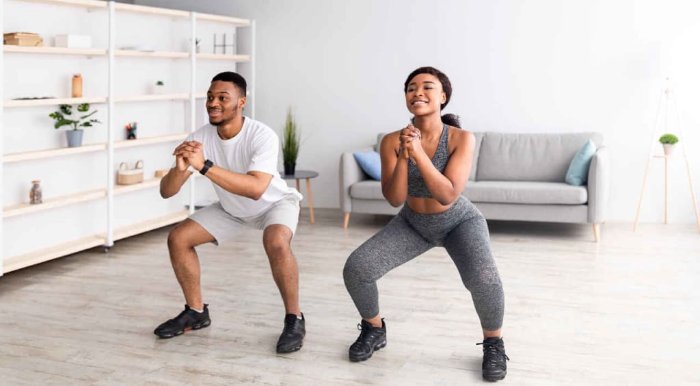
- Anywhere, Anytime Training – No gym? No problem. You can work out in your living room, hotel room, or even a park.
Science backs this up. Studies show that high-effort calisthenics can stimulate muscle growth comparable to traditional resistance training — especially for beginners and intermediate athletes.
How to Build Muscle Without Weights
To grow muscle, your training needs three things: intensity, volume, and progression.
Here’s how to structure it using just your bodyweight:
1. Focus on Compound Movements
Compound movements recruit multiple muscle groups, giving you the most results for your effort.
Start with these core exercises:
- Push Exercises: Push-ups, dips, pike push-ups
- Pull Exercises: Inverted rows, pull-ups (use a doorframe bar or resistance band)
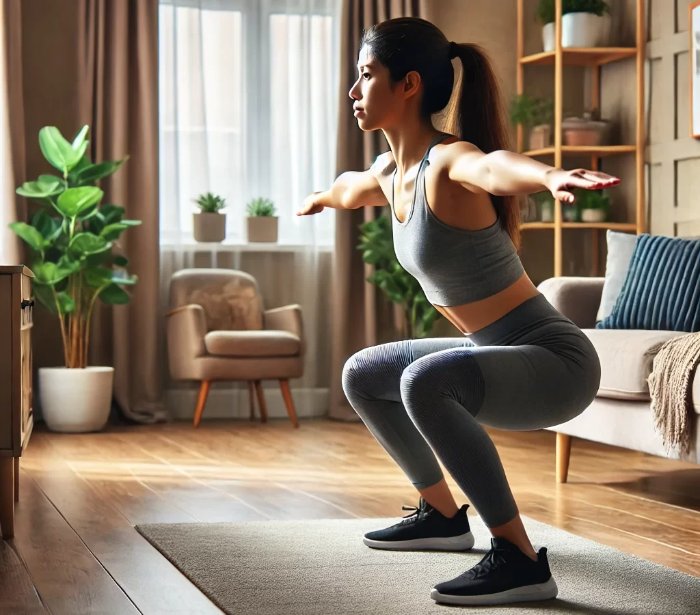
- Leg Exercises: Squats, lunges, step-ups, glute bridges
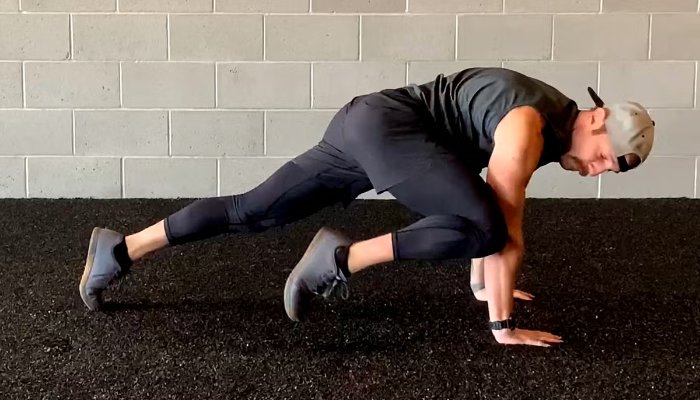
- Core Exercises: Planks, mountain climbers, hanging leg raises
These moves target every major muscle group — chest, back, legs, arms, and abs.
2. Train to Muscle Fatigue
You don’t need weights to build muscle, but you do need effort.
Perform each set until you’re about 1–2 reps shy of failure — the point where your muscles struggle to complete another rep with good form.
This level of intensity is what signals your body to grow stronger.
3. Use Progression Techniques
Keep your muscles guessing by gradually increasing difficulty:
- Add Reps or Sets: Go from 10 push-ups to 20, or 3 sets to 4.
- Slow Down Tempo: Lower slowly for 3–4 seconds to increase time under tension.
- Change Leverage: Try decline push-ups or single-leg squats.
- Add Pauses: Hold the bottom of a push-up for 2 seconds before pressing up.
Each variation forces your muscles to adapt — the essence of progressive overload.
4. Prioritize Recovery and Nutrition
Muscle isn’t built during workouts — it’s built after them.
To recover effectively:
- Sleep 7–8 hours per night
- Eat enough protein (about 1.6–2.0g per kg of bodyweight)
- Stay hydrated and manage stress
And if you’re on a keto diet, prioritize high-fat, moderate-protein foods like eggs, salmon, chicken thighs, nuts, and avocado.
Keto pairs beautifully with bodyweight training because it improves fat utilization for fuel and helps maintain lean mass during fat loss.
Sample Full-Body Bodyweight Routine
Beginner Routine (30 Minutes):
- 3 Rounds:
- 15 Squats
- 10 Push-Ups
- 20 Mountain Climbers
- 15 Glute Bridges
- 30-Second Plank
- 60-Second Rest Between Rounds
Intermediate Routine (45 Minutes):
- 4 Rounds:
- 20 Lunges (10 per leg)
- 15 Diamond Push-Ups
- 15 Inverted Rows
- 20 Jump Squats
- 45-Second Side Plank (each side)
Advanced Routine (60 Minutes):
- 5 Rounds:
- 20 Bulgarian Split Squats
- 20 Pike Push-Ups
- 10 Pull-Ups
- 20 Burpees
- 1-Minute Plank Hold
Repeat this 3–5 times per week for visible results within 4–6 weeks.
Common Mistakes to Avoid
- Rushing through reps — focus on control, not speed.
- Skipping progression — make exercises harder over time.
- Neglecting form — bad form limits muscle activation and causes injury.
- Ignoring nutrition — muscles need fuel to grow.
- Inconsistent effort — you can’t build what you don’t train consistently.
The Bottom Line
You don’t need a gym membership to sculpt your body — you need discipline, structure, and smart training.
Bodyweight workouts help you build lean muscle, strength, and endurance — anywhere, anytime. Combined with the keto diet, you’ll maximize fat loss while keeping your physique lean and defined.
Start where you are. Push a little harder each day. Your body will respond — because the most powerful equipment you’ll ever own is you.